
- About
- Curriculum Audit
- Availability
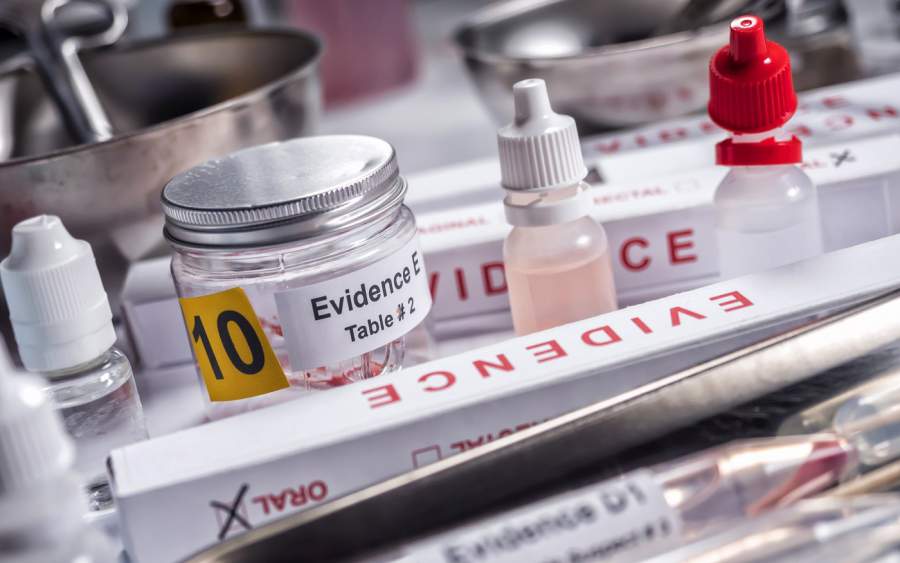
Priceless dinosaur bones have been stolen from the Quantum Museum and information has been given to the police stating that the bones have been dumped in a nearby park. Students will take on roles as detectives/forensic scientists and will collaborate in order to solve the crime.
This hands-on inquiry-based scenario will enable students to develop problem solving and team work skills. A series of investigations will be undertaken that include a computer simulation, blood* typing and testing, an analysis of soil samples, fingerprints & other pieces of evidence found at both crime scenes.
Study areas covered in this workshop include general science, chemistry and biology.
*Blood used is synthetic.
Curriculum Audit
-
Level 8
-
Critical and Creative Thinking
-
Meta-cognition
- Consider how problems can be segmented into discrete stages, new knowledge synthesised during problem-solving and criteria used to assess emerging ideas and proposals (VCCCTM042)
-
Reasoning
- Consider how to settle matters of fact and matters of value and the degree of confidence in the conclusions (VCCCTR038)
-
Meta-cognition
-
Digital Technologies
-
Data and Information
- Analyse and visualise data using a range of software to create information, and use structured data to model objects or events (VCDTDI038)
-
Data and Information
-
Science
-
Science Inquiry Skills
-
Questioning and predicting
- Identify questions, problems and claims that can be investigated scientifically and make predictions based on scientific knowledge (VCSIS107)
-
Planning and conducting
- In fair tests, measure and control variables, and select equipment to collect data with accuracy appropriate to the task (VCSIS109)
-
Analysing and Evaluating
- Use scientific knowledge and findings from investigations to identify relationships, evaluate claims and draw conclusions (VCSIS111)
-
Communicating
- Communicate ideas, findings and solutions to problems including identifying impacts and limitations of conclusions and using appropriate scientific language and representations (VCSIS113)
-
Questioning and predicting
-
Science Understanding
-
Science as a Human Endeavour
- Scientific knowledge and understanding of the world changes as new evidence becomes available; science knowledge can develop through collaboration and connecting ideas across the disciplines and practice of science (VCSSU089)
- Science and technology contribute to finding solutions to a range of contemporary issues; these solutions may impact on other areas of society and involve ethical considerations (VCSSU090)
-
Biological sciences
- Cells are the basic units of living things and have specialised structures and functions (VCSSU092)
-
Chemical sciences
- Chemical change involves substances reacting to form new substances (VCSSU098)
-
Science as a Human Endeavour
-
Science Inquiry Skills
-
Critical and Creative Thinking
-
Level 9
-
Critical and Creative Thinking
-
Meta-cognition
- Critically examine their own and others thinking processes and discuss factors that influence thinking, including cognitive biases (VCCCTM051)
-
Questions and Possibilities
- Suspend judgements to allow new possibilities to emerge and investigate how this can broaden ideas and solutions (VCCCTQ044)
-
Meta-cognition
-
Science
-
Science Inquiry Skills
-
Planning and conducting
- Select and use appropriate equipment and technologies to systematically collect and record accurate and reliable data, and use repeat trials to improve accuracy, precision and reliability (VCSIS136)
-
Analysing and Evaluating
- Use knowledge of scientific concepts to evaluate investigation conclusions, including assessing the approaches used to solve problems, critically analysing the validity of information obtained from primary and secondary sources, suggesting possible alternative explanations and describing specific ways to improve the quality of data (VCSIS139)
-
Planning and conducting
-
Science Understanding
-
Biological sciences
- The transmission of heritable characteristics from one generation to the next involves DNA and genes (VCSSU119)
-
Chemical sciences
- Chemical reactions, including combustion and the reactions of acids, are important in both non-living and living systems and involve energy transfer (VCSSU126)
-
Science as a Human Endeavour
- Advances in scientific understanding often rely on developments in technology and technological advances are often linked to scientific discoveries (VCSSU115)
-
Biological sciences
-
Science Inquiry Skills
-
Critical and Creative Thinking
-
Level 10
-
Critical and Creative Thinking
-
Meta-cognition
- Critically examine their own and others thinking processes and discuss factors that influence thinking, including cognitive biases (VCCCTM051)
-
Questions and Possibilities
- Suspend judgements to allow new possibilities to emerge and investigate how this can broaden ideas and solutions (VCCCTQ044)
-
Meta-cognition
-
Science
-
Science Inquiry Skills
-
Planning and conducting
- Select and use appropriate equipment and technologies to systematically collect and record accurate and reliable data, and use repeat trials to improve accuracy, precision and reliability (VCSIS136)
-
Analysing and Evaluating
- Use knowledge of scientific concepts to evaluate investigation conclusions, including assessing the approaches used to solve problems, critically analysing the validity of information obtained from primary and secondary sources, suggesting possible alternative explanations and describing specific ways to improve the quality of data (VCSIS139)
-
Planning and conducting
-
Science Understanding
-
Biological sciences
- The transmission of heritable characteristics from one generation to the next involves DNA and genes (VCSSU119)
-
Chemical sciences
- Chemical reactions, including combustion and the reactions of acids, are important in both non-living and living systems and involve energy transfer (VCSSU126)
-
Science as a Human Endeavour
- Advances in scientific understanding often rely on developments in technology and technological advances are often linked to scientific discoveries (VCSSU115)
-
Biological sciences
-
Science Inquiry Skills
-
Critical and Creative Thinking
Audience
- Student learning
Learning Areas
Year Levels
Tags
Delivery
On-site
Has Teacher Resources?
No
On-site Duration
1 day
Capacity
25
Time
- Arrival: 9:45am
- Finish: 2:15pm
Cost
{"default":{"cost":"(Please Enquire For Costing)","transport":""},"MD":{"cost":"$0 (Program costs are covered by DET)","transport":""},"R":{"cost":"$0 (Program costs are covered by DET)","transport":"Transport costs to the centre may be covered. Please enquire when you make a booking."},"SR":{"cost":"$20 + GST","transport":""}}